

The team at Hawaii Comprehensive Epilepsy Center & Epilepsy Research Unit.
Honolulu, June 2026 — The Hawaii Comprehensive Epilepsy Center & Epilepsy Research Unit has been awarded a study investigating BMB-101 for the treatment of Developmental and Epileptic Encephalopathies (DEEs). BMB-101 acts exclusively through the Gq-protein signaling pathway while avoiding β-arrestin recruitment. This functional selectivity offers the promise of a lower risk of receptor desensitization and drug tolerance during chronic use.
Phase 2 BREAKTHROUGH Results
Bright Mind Biosciences announced positive topline results from its Phase 2 BREAKTHROUGH trial assessing BMB-101, a selective 5-HT2C biased agonist. Patients in the DEE cohort experienced a median reduction of 63% in major motor seizures, while those with Lennox-Gastaut Syndrome (LGS) saw median reductions reaching 60%.
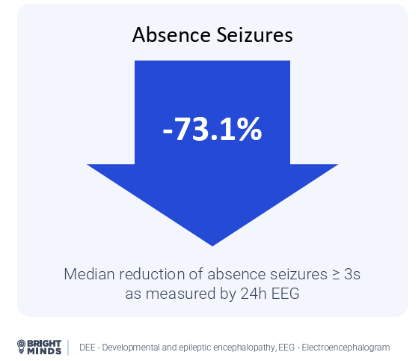
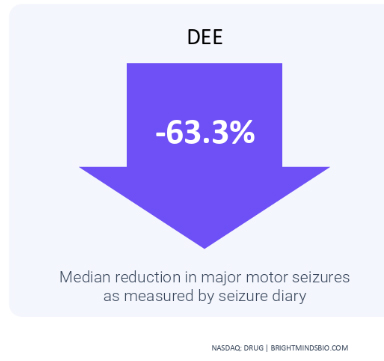
Median reductions observed in the Phase 2 BREAKTHROUGH trial.
The most common treatment-emergent adverse events (TEAEs) were respiratory infections (20.8%), fatigue (16.7%), constipation (16.7%), headache (12.5%), and drowsiness (12.5%). Notably, the study recorded a 90% increase in REM sleep without altering total sleep duration.
The DYNAMO Phase 3 Study
DYNAMO is a randomized, placebo-controlled, double-blind, Phase 3 study to evaluate the efficacy and safety of ascending doses of BMB-101 — up to a maximum tolerated dose — for the treatment of seizures associated with Developmental and Epileptic Encephalopathies (DEEs).
Who May Qualify
- Age 12–65 years
- Confirmed DEE diagnosis by clinical and EEG methods
- A minimum of 10 major motor seizures
- Have tried at least one anti-seizure medication (ASM)

“Our neurologists, epileptologists & researchers at Hawaii’s Comprehensive Epilepsy Center & Epilepsy Research Unit are honored to contribute to this important study and making available this option to our local island populations who no longer have to travel to the Mainland for advanced epilepsy treatments.”
— Darren Dugas, MD, Neurologist & Director, Hawaii Comprehensive Epilepsy Center and Video-EEG Epilepsy Monitoring Unit (EMU); Principal Investigator, Hawaii Epilepsy Research UnitDedicated Epilepsy research hotline
(808) 564-6141 | info@HawaiiNeuroscience.com
