


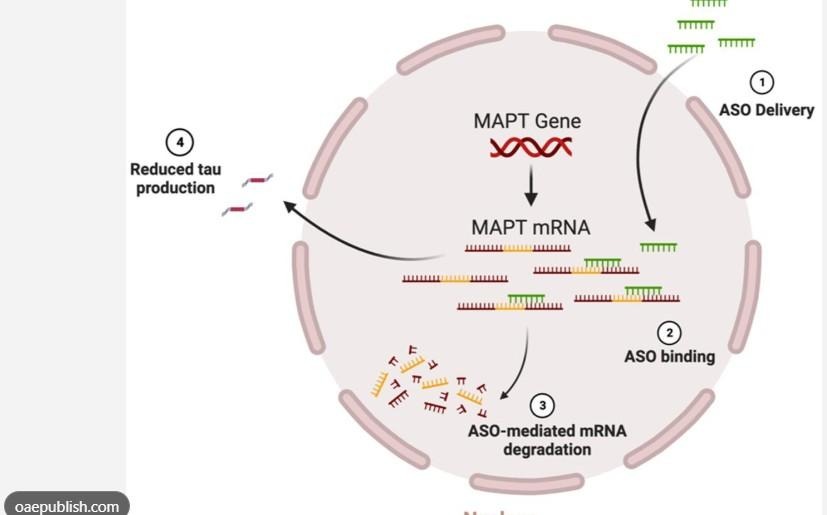


November 2026 CTAD Meeting London — For the First Time in Phase 2 Trial, CELIA Study of Diranersen (BIIB080, Biogen) Demonstrated Robust Reduction of Tau Production.
An important milestone in Alzheimer’s disease research because this represents a move beyond targeting amyloid plaques toward directly addressing tau pathology—the other major hallmark of Alzheimer’s disease. Unlike conventional drugs that attempt to remove existing protein aggregates, diranersen targets MAPT messenger RNA, instructing cells to produce less tau protein.
Targeting amyloid plaques.
Targets MAPT messenger RNA, directly addressing tau pathology.
Because it can reduce both intracellular and extracellular tau, potentially addressing tau pathology at an earlier point in its development. CELIA is described as a “gene-silencing” approach because it reduces the expression of the MAPT gene by targeting its messenger RNA (mRNA). Rather than continuously trying to remove toxic proteins after it has accumulated, researchers are attempting to reduce its production at the molecular level.
“Hawaii patients & their ohana, our neurologists & researchers are honored to contribute to this important Study in the steps to fight against Alzheimer’s diseases and to improve the lives of those living with them.”
Michael Sonson, MDNeurologist, Director & Investigator, Hawaii Memory Disorders Ctr & Alz Research Unit
